No Bees, No Food

from PennEnvironment

Millions of bees are dying off, with alarming consequences for our environment and our food supply. We rely on bees to pollinate everything from almonds to strawberries to the alfalfa used to feed dairy cows. What happens if the bees disappear? It’s simple: No bees, no food.
Let’s give bees a chance

In recent years, beekeepers report they’re losing on average 30% of all honeybee colonies each winter — twice the loss considered economically tolerable.

We rely on bees to pollinate 71 of the 100 crops that provide 90% of most of the world’s food. Imagine no almonds, fewer apples and strawberries, less alfalfa to feed dairy cows, and the list goes on.

Scientists point to several causes behind the problem, including global warming, habitat loss, and parasites. But more and more studies are showing that a class of bee-killing insecticides known as neonicotinoids (or neonics) are a clear culprit to the colony collapse occurring with bees….

keep reading at from PennEnvironment

Act Now: Protesting Shouldn’t Be A Felony

Text and petition from Sierra Club

To please corporate interests, our elected officials are willing to make protests a felony. SB 652 would make trespass on or in a ‘critical infrastructure facility’ a felony. The bill broadly defines ‘critical infrastructure’ to include oil refineries, natural gas facilities and pipelines, railroad tracks, cell towers, and many other sites.

Under this bill, what are currently summary or misdemeanor offenses, would become felonies punishable by up to two years in prison and minimum fines of $5,000 – $10,000. This bill would even make it illegal to plan a protest that would involve trespass, regardless of whether or not you actually trespass.

It’s no coincidence that this bill has been introduced in Pennsylvania, where there’s been continuous opposition to proposed natural gas infrastructure. This is an obvious attempt to silence and suppress those who speak out against environmental degradation and corporate recklessness.

This terrible bill has already passed the Senate. Let’s make sure it goes no further.

Rise For Climate


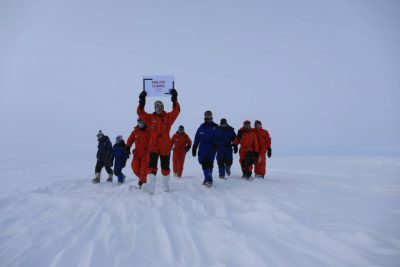
Astrobiologist Cyprien Verseux and colleagues showed support to the global mobilization from the ever shrinking ice shelves of Antarctica, marching through below zero temperatures. From “#RiseforClimate: 900+ actions on 7 continents,” 350.org, 9/9/18.

For our less snowy Chester County observance, see “Rally for Climate Justice and Environment, West Chester, 9/8/18.”

As the photo caption notes, Antarctic ice sheets are melting. See “Antarctic ice loss tripled – should we be worried?,” Citizens’ Climate Lobby, 7/3/18. Short answer: yes, very. From that site:


(A rise of less than 1 centimeter in 25 years may not sound like a lot, but we need to remember: 1) 1 vertical centimeter is several horizontal feet in a marsh or estuary; 2) the rise is apt to accelerate as ice becomes water around the globe.

West Chester Friends students are behind borough’s ban on plastic bags

by Bill Rettew, Daily Local News, Sep 20, 2018

WEST CHESTER — Borough shoppers can soon say goodbye to single-use plastic bags.

At Tuesday’s work session, council asked its solicitor to draft an ordinance to forbid distribution of single use plastic bags in stores and shops. Borough Manager Mike Perrone told the audience that a ban is likely.

Although they won’t be able to vote for more than six years, Quaker Leadership Team’s sixth-graders — former West Chester Friends School students — were instrumental in successfully lobbying for the ban. The students met eight to 10 times during the summer.

Council President Diane LeBold was pleased with the student input.

“This gives me hope for the future,” LeBold said.

“Borough council’s unanimous vote to create a transition plan for our businesses and draft an ordinance to ban single-use HDPE plastic bags in the borough is yet another demonstration of West Chester’s environmental leadership in our region,” said Mayor Dianne Herrin. “These bags are simply terrible for the environment, they clog our storm drains, and many end up as part of a monstrous plastic stew in our oceans, destroying wildlife and the very ecosystems on which we all depend for life. They are a temporary convenience we can all do without, and there are better alternatives.”…

read more at Daily Local News

The environmental impacts of Florence we feared

Half a million customers without power. Hundreds of roads washed out. At least thirty-one people killed, including a three-month-old infant. Our hearts go out to the families who have lost loved ones, and all those whose lives are forever changed by this devastating storm.

Now we’re starting to hear news of long-term environmental impacts. There are news reports of coal ash releases and flooding caused by Florence floodwaters in Wilmington and Goldsboro, NC, as well as the threat of overflowing waste pits from hog farms.

The worst isn’t over.

With the threat of waters from coal and hog waste pits flooding downstream towards the ocean, and at least one tornado that spun off of the storm, we’re talking about an impacted area that’s 250 miles from end to end. The health and safety of millions of people are at risk.

They need our help. Local organizations like North Carolina Community Foundation Disaster Relief Fund, ACT Against Coal Ash Coalition and the Food Bank of Central and Eastern NC are working on the ground to assist people impacted by this “storm of a lifetime” and address longer-term environmental damage. Your emergency gift of $5 or whatever you can give will go a long way as this punishing storm continues to churn across the Carolinas.

Can you make an emergency gift to the Sierra Club’s Hurricane Florence recovery efforts now? 100% of the funds you donate will go directly to the nonprofits serving the communities affected most by this devastating storm.

While the extent of the environmental destruction wrought by Florence may not be known for some time, we do know that 2,000 cubic yards of coal ash — known to be toxic — was spilled at Duke Energy in Wilmington, compounding what is already a public health crisis.

Just two years ago, Hurricane Matthew caused a massive coal ash breach and submerged dozens of hog and chicken facilities, compromising pits containing millions of gallons of hog manure. We now know what low-income communities in rural areas face — particularly when they don’t know whether their soil and water are safe.

Activists on the ground are already working on a long-term recovery and prevention plan to guard against future weather events — even as emergency and nonprofit workers continue to rescue, feed, house and help our neighbors still suffering in the storm.

Please, donate what you can to the locally-led organizations that will be doing the cleanup AND taking care of our neighbors in the weeks and months to come.

Our thoughts go out to the 20,000 of our neighbors taking refuge in shelters, waiting to see if they have anything to go home to, as well as those still waiting for the worst.

And our thanks go to friends like you for helping make sure our partners on the ground have what they need to save lives and begin to repair the communities hit hardest by this unforgiving storm. We’re grateful for your support at times like this.

Sincerely,

Molly Diggins
Director, North Carolina Chapter
Sierra Club

Open space actions by Chester County municipalities

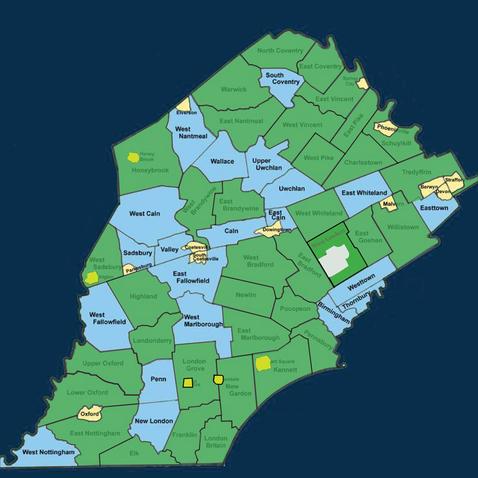
Map from “The round of applause heard ’round the county” by Ken Hemphill at Neighbors for Crebilly, 9/18/18. Green = municipalities that have passed open space referenda or other measures to buy or preserve open space, 1992-. Blue = not. Yellow = urban areas. Click on the list of municipalities there for details.

See also the detailed “parcel map” of preserved open space on the Chesco web site. Or dwnload (through 2016) here: ProtectedOpenSpace2016_201708011325275412. The good news is that all municipalities in the county, even those with no formal municipal actions, have protected open space, in some cases quite substantial.

Lawsuit denied concerning Bishop Tube site

Daily Local News, Sep 7, 2018

EAST WHITELAND – The Pennsylvania Superior Court dismissed the continued attempt by Bishop Tube Developer Brian O’Neill, along with his corporate counterparts O’Neill Developers and Constitution Drive Partners, to silence the Delaware Riverkeeper Network.

The Riverkeeper has fought to build a park at the brownfield site.

The Sept. 6 dismissal was rendered by Judge Bender and Judge Lazarus of the Pennsylvania Superior Court.

“The lawsuit filed by Brian O’Neill and his counterparts was a clear effort to silence, through intimidation, myself, my organization and the residents opposed to his proposed partial clean up and associated development plan; this is what is known as a SLAPP suit, a strategic lawsuit against public participation,” said Maya van Rossum, the Delaware Riverkeeper. “It is wrong for anyone, particularly a well-funded team of lawyers, corporations and individuals to misuse our legal system to scare a community into silence.

“While we were confident that the judges would once again see through Mr. O’Neill’s false claims, bluster and fear tactics, it’s always nice when the decision finally comes down. If Mr. O’Neill appeals yet again, we will know that this is a clear and obvious strategy to try to drain the financial resources of a concerned nonprofit and private individuals.”

The site is bordered by Little Valley Creek, a tributary to the “exceptional value” Valley Creek. Portions of the site proposed for development are wooded. The site is listed on the Pennsylvania Priority List of Hazardous Sites for Remedial Response under the Pennsylvania Hazardous Sites Cleanup Act (HSCA). Groundwater, soil and surface water at the Site are contaminated with trichloroethylene (TCE), which is classified as a probable human carcinogen by the EPA and also as causing other significant health problems. Other contaminants of significant concern are also known to be present at the site.

The Delaware Riverkeeper Network, led by van Rossum, the Delaware Riverkeeper, was also named as a defendant in the suit, and has been actively challenging a proposal by O’Neill, O’Neill Developers and Constitution Drive Partners for only a partial clean-up of the contaminated site known as Bishop Tube located in East Whiteland Township. O’Neill wants to build more than 200 homes at the site.

The original SLAPP action was filed by O’Neill on June 27, 2017 in the Court of Common Pleas in Chester County and claimed the advocacy activities of van Rossum and the Delaware Riverkeeper Network resulted in defamation/commercial disparagement, interference with contractual or business relations and amounted to a civil conspiracy.

O’Neill sought a judgement that would both silence the organization and mandate they pay over $50,000 in damages. The suit also threatened to target up to 10 additional residents, naming them as defendants to the suit, in addition to a resident already included as a named defendant.

Judge J. Sommers, presiding over the case at the Court of Common Pleas, dismissed the suit on Aug. 22, 2017, determining that van Rossum and the Delaware Riverkeeper Network were engaged in “constitutionally protected free speech under the First Amendment of the United States Constitution and the Pennsylvania Constitution” and that the defendants are “immune from plaintiff’s tort claims.”

O’Neill and his counterparts immediately appealed the decision. Judge Sommers issued a follow-up opinion in which the judge stated that the complaints filed against DRN “lack merit.”…

read more at Daily Local News. See also Bishop Tube – Clean, Green Open Space, Not Partial Cleanup for Buildout on Facebook

Judge to hear Toll Brother’s appeal of Crebilly Farm site development

[n.b. see the latest in “The round of applause heard ’round the county” by Ken Hemphill at Neighbors for Crebilly, 9/18/18.]

By Michael P. Rellahan, Daily Local News, 9/16/18

WEST CHESTER — A packed courtroom is expected at the Chester County Justice Center Monday for a hearing on the appeal of Toll Brothers of the denial of its plans to build a housing development at the Crebilly Farm site, property that residents have claimed as the “crown jewel” of Westtown that should be left largely untouched.

The Horsham-based development is asking Common Pleas Judge Mark Tunnell to overturn a 2017 decision by the three member Westtown Board of Supervisors to deny its conditional use application to locate a 319 unit subdivision on the 322 acre property located along Route 926 and South New Street.

Toll Bros. contends that the supervisors denial of its development plans ran against the law, was an abuse of discretion, and was not supported by the evidence it put forward in a number of well-attended public hearings from 2016 to late 2017.

Residents opposed to the development plan are expected to crowd into Courtroom One, where Tunnell moved the oral arguments to in order to accommodate the large number of people expected to attend….

Read more at Daily Local News

Here is the analysis of Neighbors for Crebilly (the only group that has legal standing in this appeal), especially focusing on the importance of the Pennsylvania Environmental Rights Amendment:

Toll Brothers wants our brief “quashed”

As you know, Neighbors for Crebilly has been permitted by Chester County Common Pleas Court to intervene in Toll Brothers’ appeal of Westtown’s denial of their conditional use application. Oral arguments in this appeal will made this Monday, September 17th at 1pm in courtroom #1. Please join us if you can.

A quick word about Toll’s legal arguments which, as you can imagine, mock reality. Their lawyer, Greg Adelman, actually argued in a recent brief to the court that the Environmental Rights Amendment should not be applied to the “conditional use process,” a bizarre line of argument to say the least, and that our legal brief should be quashed. What Toll would have the court believe is that laws passed by the PA state legislature – including the PA municipal planning code of which the “conditional use” process is a part – must not be examined or questioned in terms of their impact on the environment. In other words, the legislature, according to Toll’s lawyer’s flawed reasoning, can pass any law it chooses regardless of the harm it causes the environment, and the courts must not weigh in on those laws.

But outside Toll’s time-space distortion bubble, Courts strike down unconstitutional legislation all the time. As this conditional use application from Toll Brothers would permanently impair environmental and historic resources at Crebilly Farm, the Environmental Rights Amendment must take precedence over the conditional use process since the state Constitution supersedes all laws passed by the legislature. That’s why the process of amending the constitution is so onerous: the amendment must pass the two legislative houses in two consecutive terms and then be approved by voters. Therefore, the unanimously-passed Environmental Rights Amendment (Article 1, Section 27) of our state constitution, outweighs laws passed by the legislature. This amendment guarantees environmental protection for allpeople in the Commonwealth, including generations yet to come. So it is plainly ludicrous for Adelman to argue that the E.R.A. must not be considered in the conditional use process.

It was also curious that Adelman would cite as support for his argument any case from Commonwealth Court regarding the Environmental Rights Amendmentsince, in 2017, the PA Supreme Court threw out the Commonwealth Court’s three part “Payne Test” which had been that Court’s method of ignoring environmental protections afforded state citizens under the Constitution. Writing last year for the majority in Pennsylvania Environmental Defense Foundation vs. the Commonwealth of Pennsylvania, “Justice Christine Donohue said the prior interpretation of the amendment, which included a 3-part legal test and [which] was in place for four decades, ‘strips the constitution of its meaning.’ The opinion clearly defines the role of the state as trustee, which the court said is associated with fiduciary responsibilities.” (Quoted from PA State Impact)

Unfortunately for Adelman’s argument, the Pennsylvania Environmental Rights Amendment occupies higher ground than the conditional use process which is merely part of a set of laws which are informed and governed by our state constitution.