Home Page of The Chester County Plastic Pollution Task Force
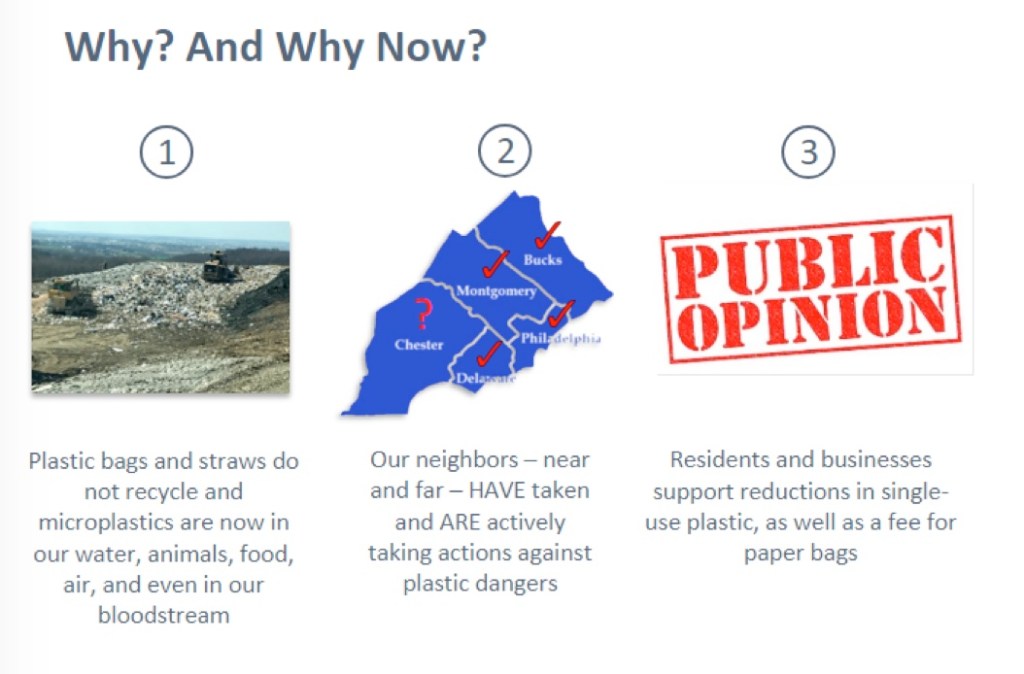
From the global to the microscopic, plastics pose many severe and interrelated problems.
The Chester County Plastic Pollution Task Force was established in January 2024. Our group works with the Southeastern PA Single-Use Plastic Coalition, which is coordinating efforts to encourage more Chesco municipalities to enact bans.
Do you live in a municipality that has not yet restricted plastic pollution? For information to help municipalities work toward a single-use bag ban, see “Single Use Bag ban in your community.” To contact our group, email here.
Besides the positive impact of plastic reduction, whatever makes people think more about consumption, waste and environment is to the good!
The threat posed by plastics to human health is even worse than has been feared. An article in the journal eBioMedicine (vol. 117, July 2025) focuses on phthalates, a group of chemicals often used to soften plastics in flexible pipes, medical tubing, package and food wrappings, electrical wires, electronics, vinyl flooring, toys, clothing, insect repellents, and many other products in everyday life. Highly processed and fast foods are notable sources of human intake. Phthalates are believed to contribute to inflammation, ADHD, obesity, and especially heart disease. According to the current study, in 2018 (gathering and analyzing data is a slow process!), “In 2018, an estimated 356,238 deaths globally were attributed to DEHP exposure, representing 13.497% of all cardiovascular deaths among individuals aged 55–64.” (DEHP is a widely-used phthalate.) And of course, phthalates and other such chemicals cause health problems short of death as well. Sad to say, most of us have detectable levels of phthalates in our bodies. What is the moral? To reduce production of plastics and to do all we can to avoid contact between plastics and items in our daily lives, particularly food and drink.

Environment and Health

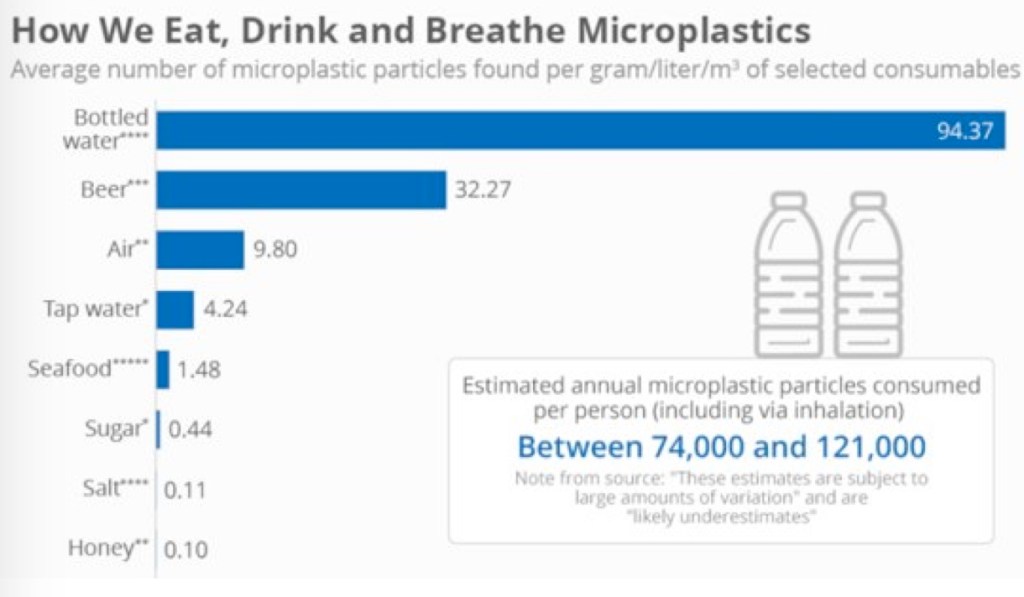
As described in Yale Climate Connections, “How plastics contribute to climate change,” making plastic requires destructive oil and gas development, extraction, refining and transportation; manufacturing bags, then incinerating or landfilling them, is highly polluting; plastic recycling is spotty and requires public subsidies; litter and release of plastic particles, whether large enough to see or microscopic, damage environmental and human health. Microplastics are now being found in almost all humans’ bodies, including in placentas, and threaten male fertility. Many of those problems exacerbate climate change.
Single-use plastics waste money for the retailer, the public, and the municipality
• Businesses pay upwards of $1 for a hundred bags, and they also have to pay people to unload them, distribute them throughout the store, and hand them over to any customers who don’t bring their own reusable bags; and they may have to spend staff time dealing with confusion or complaints about their policies. Businesses generally will be happy to comply with a single-use plastic bag ban; they just don’t want to be the first in the community. Without “free” plastic bags, retailers could pass cost savings along to customers and be more competitive.

• Each municipality spends time and resources, both paid and volunteer, picking up and disposing of litter, which tends to include a lot of plastic bags. Municipal costs increase for everyone when the recycling machinery has to be shut down so personnel can extract scraps of wayward plastic bags gumming up the machinery.
• According to Beyond Plastics, “A report published in the Annals of Global Health in 2023, conservatively estimated that Americans spent over $1.5 trillion on health costs related to plastics in 2015.“ It all adds up to a really big and growing bill—and not only financial—that individuals and societies will be paying for generations.
Plastic bags, a ubiquitous manifestation of this damaging cycle, are something we as individuals and communities can do something about.

PennEnvironment’s extensive online resources (under “Beyond Plastic”) include a model ordinance and at “Plastic bag bans work” a “Single-use Plastic Bag Ban Waste Reduction Calculator” to figure out how many bags a ban would save for the people in each municipality, at the rate of about 300 bags per resident per year. Also: “Single-Use Plastic Laws in Pennsylvania” (including a list of municipal bans) and “Analysis finds bag bans effective at reducing plastic waste, litter.”
Experience has shown that bans need to include a charge for customers who don’t bring a reusable bag and request a permitted paper bag. Retailers giving away paper bags just increases costs and makes things worse! For background info showing that the most effective ban format is to put a $.15 charge on all retail carry-out bags, of whatever material and to whichever customers, see Maurice Sampson’s Dec. 2022 memo on behalf of Clean Water Action to Philadelphia City Council here.
Chester County is leading the way in Pennsylvania toward a comprehensive ban on single-use plastic bags. Seven Chesco municipalities have banned single-use retail plastic bags. So far Easttown, Phoenixville (effective 1/1/25), Tredyffrin, Uwchlan, West Chester, West Goshen, and West Vincent (enacted July 2024, effective in October) have bans in place. But Montco has now taken the state lead! (See map at EnvironmentAmerica.) Which Chesco municipality will be next?
More Info and Action
See the plastics section of CCEA’s 2022 Common Environmental Agenda here, page 21.
For a cogent summary of the financial as well as environmental benefits of a single-use ban, see the Easttown EAC‘s study “Economics of Single Use Plastic Bags” here. For more on the Easttown ban, see here.
See the Sierra Club‘s comprehensive study of single-use plastic’s environmental and fiscal costs here, as part of a 2020 submission urging the Independent Fiscal Office of Pennsylvania to perform the due environmental evaluation of state actions temporarily delaying municipalities’ ability to restrict single-use plastic bags.

Sign the Food and Water Action petition to ask Congress to ban the release of plastic nurdles into waterways here (nurdles are pellets averaging about 1/8 of an inch in diameter, the tiny basic building blocks of plastic products) . “An estimated 200,000 metric tons of nurdles make their way into oceans annually,” according to Neel Dhanesha, “The massive, unregulated source of plastic pollution you’ve probably never heard of,” a 2022 article in Vox.
For the global Break Free From Plastics movement, see here.
You can view the 4-minute animated short The Story of Plastic here. See the trailer for the full documentary, from the Story of Stuff, here. You can also see there how to view the documentary in your community or organization. See the PBS 2019 documentary The Plastic Problem here (“Every piece of plastic that’s ever been produced, unless there is something we don’t understand yet, is likely still here today in some form”).
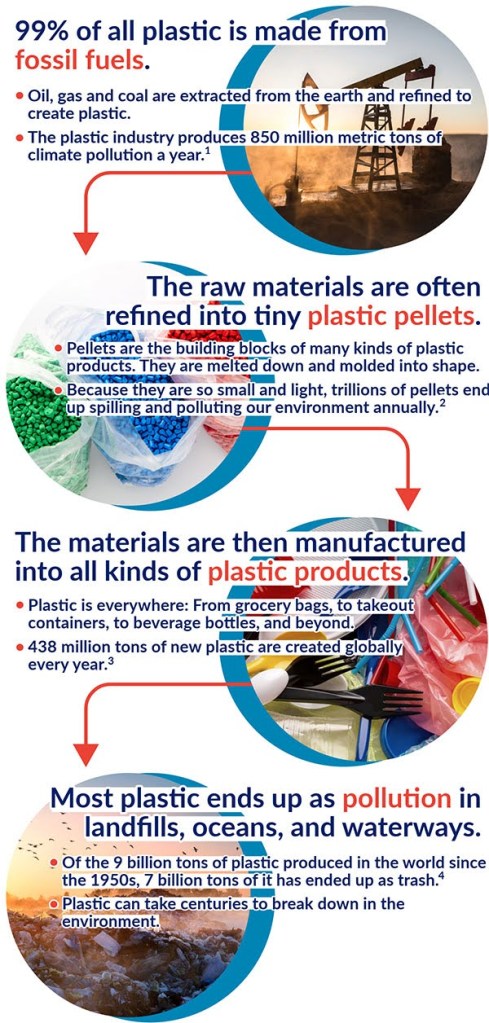
This graphic from PennPIRG (which also has a thorough explanation of how plastic is made) summarizes the production and (unfortunately extremely lengthy) life cycle of plastics:
Plastic and Art
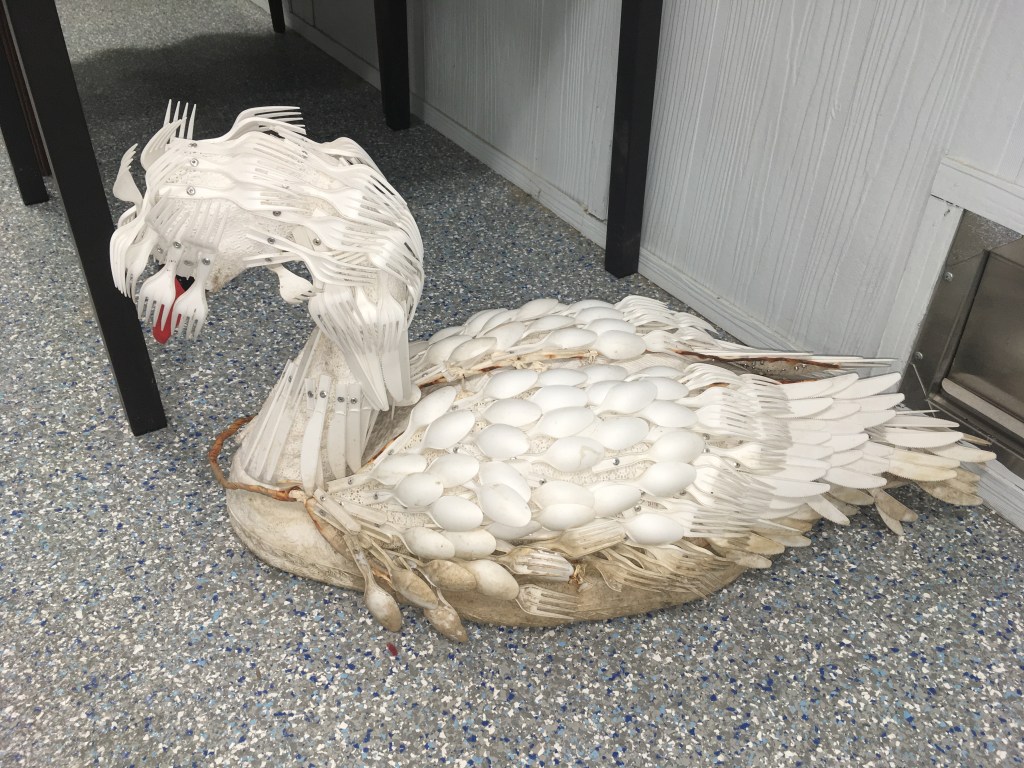
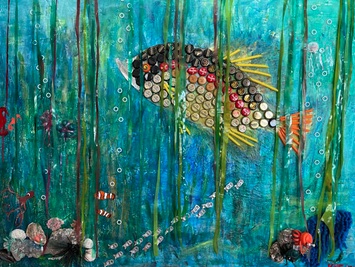
So much plastic is floating around, and so little is actually recycled or reused in construction materials… at least art keeps plastic out of circulation and plastic provides free material for artists!
Plastics Activists Are Not Alone in the World
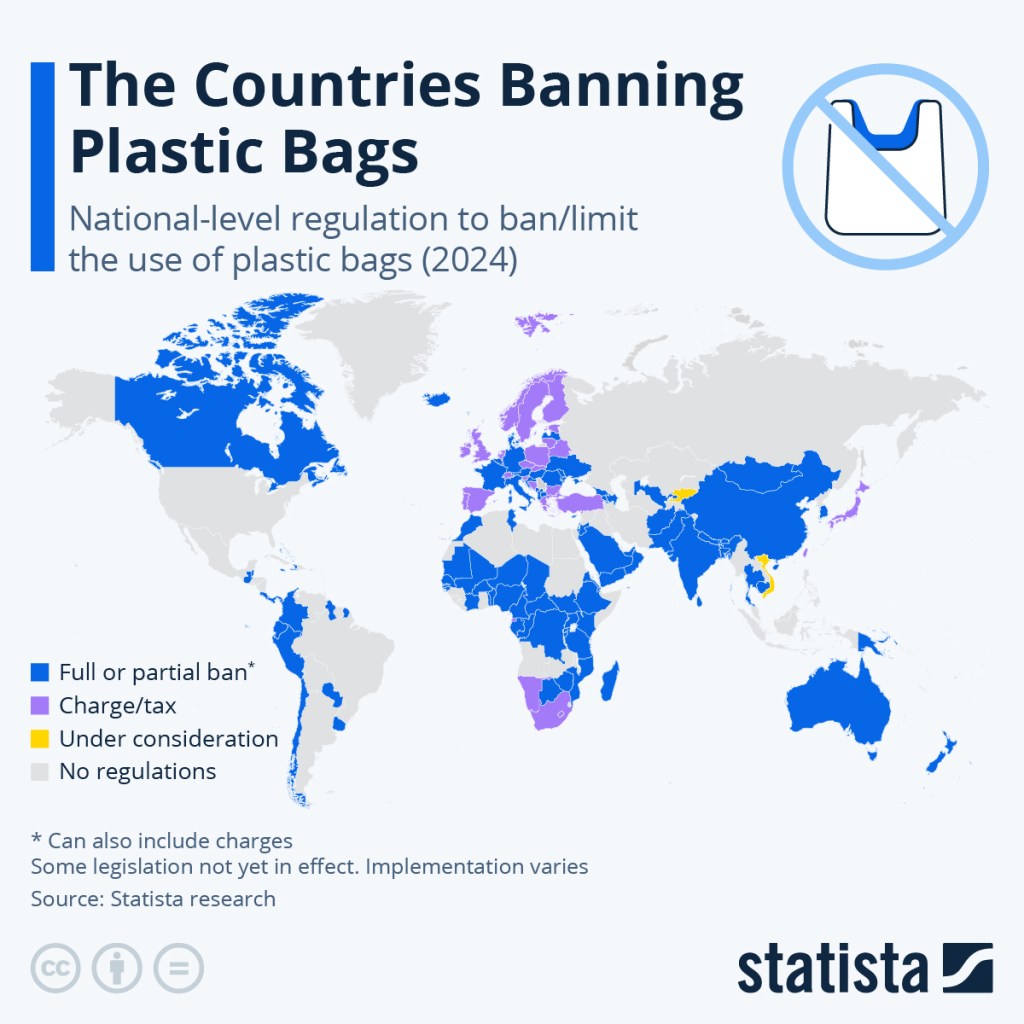
According to Statista (map below from there), as of July 2024 “91 countries and territories in the world have passed some sort of full or partial ban on plastic bags.” The US is not one of those, which is why state and local action is so important here. Thanks for being part of it!
 Chester County Environment Alliance