Sierra Club Applauds Governor Wolf for Setting Statewide Climate Protection Goals

Sierra Club Pennsylvania Chapter, January 8, 2019

Harrisburg, P.A.– Governor Wolf signed an executive order today committing Pennsylvania to reducing greenhouse gas emissions 26 percent by 2025 and 80 percent by 2050 from 2005 levels, consistent with the 2015 Paris Climate Accord. The executive order also includes a provision re-establishing the Green Government Council, co-chaired by the Department of General Services, the Department of Conservation and Natural Resources, and the Department of Environmental Protection. The goals of the council are to reduce energy consumption in state government by 21 percent, procure 40 percent of state agency energy use from renewables, and replace 25 percent of the state fleet with electric vehicles by 2025.

Pennsylvania marks, at least, the 17th state to commit to goals consistent with the Paris Climate Accord in the face of inaction on a federal level. After President Trump took office, the United States became the first country to withdraw from the Accord’s climate goals, drawing intense criticism internationally, and from many cities, states, and businesses here at home.

In response, Joanne Kilgour, Chapter Director of the Sierra Club Pennsylvania Chapter, responded with the following:

“The science is clear – climate change is happening all around us and affecting not only communities across Pennsylvania, but around the world. Governor Wolf’s commitment to serious climate action and reinstating the Green Government Council is a bold statement that signals Pennsylvania is going to do its part to curb climate change, which will cut other dangerous pollution and promote job growth across the state. Already, major cities like Pittsburgh and Philadelphia have committed to meeting the Paris climate goals, and communities in Chester and Delaware Counties are leading the way by committing to 100 percent clean energy. Sierra Club is excited to support Governor Wolf in implementing this plan to slash carbon pollution. As an organization, we will continue to work for an energy future that is equitable and powered by 100 percent clean, renewable energy.”

Contact: Emily Pomilio, Sierra Club, (480) 286-0401, emily.pomilio@sierraclub.org
Joanne Kilgour, (412) 965-9973, joanne.kilgour@sierraclub.org
Tom Schuster, (814) 915-4231, tom.schuster@sierraclub.or

by Mary Oliver, 1935-2019

The Summer Day

Who made the world?
Who made the swan, and the black bear?
Who made the grasshopper?
This grasshopper, I mean-
the one who has flung herself out of the grass,
the one who is eating sugar out of my hand,
who is moving her jaws back and forth instead of up and down-
who is gazing around with her enormous and complicated eyes.
Now she lifts her pale forearms and thoroughly washes her face.
Now she snaps her wings open, and floats away.
I don’t know exactly what a prayer is.
I do know how to pay attention, how to fall down
into the grass, how to kneel down in the grass,
how to be idle and blessed, how to stroll through the fields,
which is what I have been doing all day.
Tell me, what else should I have done?
Doesn’t everything die at last, and too soon?
Tell me, what is it you plan to do
with your one wild and precious life?

10 Reasons to Feel Hopeful About Climate Change in 2019

By Wendy Becktold, Sierra magazine, Jan 10 2019

Humanity’s on the brink, but signs are emerging that we’ll pull back

In 2018, hurricanes, floods, fires, and droughts wreaked a level of destruction on the planet that, according to scientists, is just a taste of what is to come. In October, the International Panel on Climate Change issued a report stating that we have about 12 years to avoid catastrophic climate change. Meanwhile, global greenhouse gas emissions reached a record high in 2018. So is it still reasonable to hope that we can wean ourselves off fossil fuels in time to avert global calamity?

As David Roberts of Vox points out, that’s the wrong question. Climate change is happening now, and lots of change for the worse is already locked into place. But, as Roberts puts it, “we have some choice in how screwed we are.” Climate change isn’t a binary—safe or unsafe, screwed or not screwed—but rather a spectrum. That will remain true no matter how we respond to the task of reducing greenhouse gas emissions, or how severe the weather gets. “Yes, it’s going to get worse,” Roberts writes, “but nobody gets to give up hope or stop fighting.” Exactly right. Here, then, are 10 glimmers of hope that humanity will opt for less screwed over more screwed in 2019. …

read more at Sierra

Tell Your Senators and Representatives: It’s Time for a Green New Deal!

from Beyond Pesticides

As the dust settles on the final Farm Bill, which passed the U.S. Senate and House of Representatives last month, it is clear that neither the substance nor the process on a range of issues meet the urgent need to address key sustainability issues that put the future in peril.

We must not allow this Farm Bill to be the final word on a number of critical environmental issues facing the nation and world. That is why it is absolutely critical that we get to work immediately, with the new Congress, to set a new course that transforms the institutions of government that are holding back the urgently needed transition to a green economy.

Tell your Senators and Representative to support a Green New Deal that restructures food and agriculture programs.

On the Farm Bill, our victories were mostly measured in terms of what we were able to remove from the Farm Bill—not the standard of achievement that we need to face critical environmental threats….

read more at Beyond Pesticides

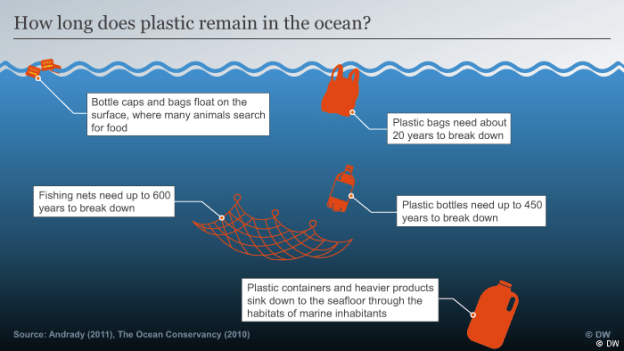
EU reaches agreement on single-use plastic ban

DW.com

A plan to ban single-use plastic products such as disposable plates and straws has been agreed. EU member states and the EU parliament still have to give the provisional agreement the go-ahead.

A plan to ban single-use plastic products such as disposable plates and straws has been agreed. EU member states and the EU parliament still have to give the provisional agreement the go-ahead.

European lawmakers have reached an agreement on a ban of single-use plastic products, the Austrian presidency said in Brussels on Wednesday.

The move is aimed at making the EU a world leader in using sustainable alternatives that avoid marine pollution.

What does the plan involve?

There will be a plastic ban on products where alternatives are readily available and affordable, including plastic cotton swabs, cutlery, plates, straws, drink stirrers and sticks for balloons.

Member states will have to implement measure to reduce the use of plastic food containers and drink cups….

read more at DW.com

Uphold Pennsylvania’s Environmental Rights Amendment & Act on Climate!

email from Delaware Riverkeeper Network, 12/13/18

Pennsylvania’s constitution contains an environmental rights amendment, or a Green Amendment—Article 1, Section 27—protecting every Pennsylvanian’s right to pure water, clean air and a healthy environment for both present and future generations.

Since its adoption in 1971, legislators and governors have largely ignored it. In 2013, the Delaware Riverkeeper Network, Maya van Rossum, the Delaware Riverkeeper, and her team won a watershed legal victory that breathed legal life into the constitutional right of people in the state to a clean and healthy environment. But the battle to fully define and defend the environmental rights of the People of Pennsylvania continues.

It’s time for Pennsylvanians to claim that right.

The Delaware Riverkeeper Network, along with the Better Path Coalition, invite you to join our campaign to tell Harrisburg that it’s time to uphold Article 1, Section 27 and be the climate and environmental champions we need.

Here’s how you can get involved!

Sign and share the online version of our petition right now!
Circulate a paper petition in your community!
Plan to join us in Harrisburg on January 27th (1/27) to learn more about our Pennsylvania Green Amendment and to be part of our call to the legislators that it is time to honor their oath to defend our constitutional right to pure water, clean air and a healthy environment.

Criminal Investigation Opened Into Sunoco, Chester Co. Pipelines

By Justin Heinze, Patch, Dec 19, 2018

Breaking: Sunoco is now under investigation in Chester County for potential crimes in the construction of the Mariner East pipelines.

CHESTER COUNTY, PA — After years of controversy, environmental damage, and public calls for government action, Sunoco is now under investigation in Chester County for potential crimes in the construction of the Mariner East pipelines.

Sunoco has been the focus of ire of local environmentalists and state lawmakers for some time, following numerous drilling fluid spills, sinkholes, the contamination of drinking water, and more.

State Sen. Andy Dinniman has led the charge in what he has previously termed a “David vs. Goliath” fight against Sunoco and their drilling operations. That culminated last year with a judge ordering Sunoco to halt all operations, and then again this year with a $12.6 million fine against Sunoco for safety violations.

However, construction on Mariner East 2 has continued, and concerns over the pipeline persist.

“In the last two years, we have seen these pipelines rip through the heart of Chester County,” DA Tom Hogan said in a statement Wednesday. “We have seen sinkholes created by the pipeline drilling, contaminated well water, and some subtle and not-so-sublte bullying of Chester County citizens by big corporate interests.” …

read more at Patch

The Robinson Family owes it to taxpayers to protect all of Crebilly Farm

from Neighbors for Crebilly Facebook, 10/23/18

Whose brain doesn’t ache when it’s time to send that big piece of our yearly pie to our town, county, school district, state, and the federal government? It hurts our heads less, though, when we can see the essential services we get in return. Trash picked up. Roads paved. Kids educated. Fires fought. New Jersey defended from foreign invasion, etc. But no one likes paying higher taxes than necessary, or learning that someone else is not paying their fair share. We feel swindled. But it’s cheated we’ve been vis a vis the Crebilly Farm saga. The owners of that rare piece of idyllic eastern Chester County landscape, the Robinson family (heirs to the Acme Markets fortune and inheritors of Crebilly Farm) entered into a contract with Toll Brothers to pave our common legacy which experts conclude saw part of the Battle of the Brandywine. Toll’s and the Robinson’s plan to desecrate hallowed ground might suffice to get your dander up. If not, maybe knowing that you subsidized Crebilly Farm for decades will.

Unlike the vast majority of homeowners and landowners in the region, the Robinsons actually paid significantly reduced property taxes for Crebilly Farm because of a 1974 PA tax abatement measure called the “Clean and Green Program” (Act 319 ). The intent of this law was to encourage owners of 10 or more acres to conserve their land in return for large property tax breaks. However, no conservation easements are placed on enrolled land which is only safe for as long as the owners want to keep it open. For those who never intend to develop, Act 319 is a very fair deal for everyone: the landowner gets a nice tax reduction and taxpayers get the benefits of open space. For those like the Robinsons who decide to cash in on their land, Act 319 is nothing more than a decades-long tax holiday with an insultingly weak penalty for leaving the program: the sum of the last seven years of unadjusted taxes plus six percent interest. Even if a parcel has been enrolled since 1974, landowners only pay back seven years of unadjusted taxes instead of the full 44 year tab.

It’s a big tab we’ve picked up for the Robinsons. Instead of paying approximately $48,000 each year on the unadjusted assessment value of 322 acres, they pay just $6,519 in total on their open land. That’s less than what most homeowners pay for a house on one acre and it represents missing revenue for area taxing authorities who recoup that loss via higher taxes for the rest of us. In other words, if they had paid taxes based on the full assessed value of the land, everyone else’s tax bills would have been lower. Choosing to stay in the Clean and Green program would continue to be a fair arrangement: Crebilly would not send students to schools or cars to roads; it wouldn’t need sewers, traffic lights, or police protection. It wouldn’t need an army to defend it even if the original American army fought there. But now that they’ve chosen to leave Act 319 by selling to Toll, their “penalty” really becomes our penalty.

These absurd PA “rollback taxes” pale in comparison to what’s in place in New York state. Withdrawing from one of that state’s preservation programs costs the landowner the last 10 years of unadjusted taxes – multiplied by five – plus interest. NY’s exit fee in many cases is greater than what was saved with lowered tax bills. Consequently, very few landowners leave that state’s program. The weak exit cost for leaving Pennsylvania’s Act 319, on the other hand, actually cheats taxpayers twice. Not only is just a small fraction of lost tax revenue recovered, after the land is residentially developed, taxes invariably rise as increased population density necessitates more expensive services.

Residentially developing Crebilly would be not be financially beneficial to taxing authorities. While revenue would increase from new taxpayers, there are associated costs attached to that new revenue. According to separate well-regarded national studies by the American Farmland Trust, the Keystone Conservation Trust, the Trust for Public Land, and the DVRPC, each dollar of revenue raised from a new residential development actually costs a taxing authority between $1.03 and $2. Taxpayers, therefore, face higher tax bills when residential developers come to town by adding to the housing density of the municipality, SD, or county. Simply, increased density triggers a need for more expensive services.

If tax rates weren’t hitched to density, the 80,000 people living in the eight square miles of Upper Darby Township would have some of the lowest taxes in PA. Instead, they have some of the highest. Conversely, lower density equals lower taxes: compare Pocopson Township to Upper Darby, Chester County to Delaware County, New Hampshire to New Jersey. In the vast majority of cases, lower density equals lower taxes. West Chester Area School District understands this well which is why the school board passed a resolution last year demanding $645,000 per year from Toll for five years to pay for the large influx of new students to the district.

Some apologists for this taxpayer swindle will argue that we got open space for all the years the Robinsons were in the program, but that ignores the undeniable fact that Act 319 was intended to encourage conservation. Passed shortly after the Environmental Rights Amendment was added to our state constitution in 1971, it reflected the new concern for the environment that infused the early 70s. The PA Legislature certainly did not intend this program to be used by large landowners as a temporary tax haven while waiting for the right moment to cash in. But that’s what it’s become and area Pennsylvania Legislators have refused to do anything about it.

So how much have the Robinsons saved through Act 319 since the 70s on all the land they’ve owned and sold off along the 202 corridor and on both sides of 926? Likely millions. That’s money we had to pay instead. If Toll ever defiles Crebilly and its history with a colony of plastic houses, it’s money we’ll never get back. Added to the trauma of losing Crebilly is the insult of higher taxes that would be needed to pay for new services. But this doesn’t have to be. The Robinsons could, if the opportunity presents itself, show their appreciation to taxpayer largesse and sell Crebilly Farm at a conservation price to a consortium so that all future generations could enjoy it as a county park and a hallowed sanctuary of open space to honor the first American heroes.

You’ll Never Even Know We Were Here,’ Sunoco Told Ginny. They Lied

Food and Water Watch, 12/2/18, 12/2/18

When Sunoco/Energy Transfer Partners came to Chester and Delaware counties just outside of Philadelphia to push their plans to drill, they didn’t dream that Ginny and her community would put up the fight that they have. Now that these neighbors have had some success in tangling Sunoco’s plans, they’re planning to fight even harder to get the company’s pipelines out of their yards.

When Ginny Marcille-Kerslake looks back on the last two years of damage to her community, what upsets her the most is the fact that Sunoco/Energy Transfer Partners lied to her.

“You’ll never even know we were here,” is what the fossil fuel corporation said, according to residents who were talked into getting on board with their underground drilling plan for the Mariner East 2 and 2X pipelines, which would transport highly explosive liquids right through their community.

It’s become something of a sick punchline now that time has shown the havoc Sunoco/ETP would wreak on residents’ homes, yards, safety, and property values, not to mention their time, energy, and peace of mind….

read more at Food and Water Watch, 12/2/18

Methane sample letter to Gov. Wolf

Text of sample message in a petition for which signatures are being gathered by PennFuture:

Pennsylvania is the second largest natural gas producing state in the nation. Methane pollution, as well as harmful VOCs from this production, poses a serious risk to our climate and our health.

Thank you for adopting crucial oil and gas pollution standards to control methane, VOCs and other harmful pollutants from new and modified natural gas infrastructure. This action was a significant step in cutting climate-warming methane and harmful air pollution across Pennsylvania.

However, there is still a lot of work to do. While the Trump administration attempts to roll back existing federal methane standards, tens of thousands of existing natural gas wells, compressor stations, and auxiliary infrastructure across Pennsylvania continue to leak methane. A recent analysis from Environmental Defense Fund (EDF) estimated that oil and gas facilities in Pennsylvania emit over 520,000 tons of methane annually. That figure is five times higher than what industry self-reports to the Pennsylvania Department of Environmental Protection (DEP).

Regardless of the future of federal methane rollbacks, I implore you to direct DEP to develop a comprehensive rule to directly control methane from existing natural gas sources similar to the standards DEP developed for new and modified sources. Controlling VOCs, while excluding methane, will not fulfill your pledge to protect the environment and public health and curb climate change. By directly targeting methane, DEP would ensure the rule covers as many sources of methane across Pennsylvania as possible.

I urge you to continue your record of taking strong action on this issue by ensuring that DEP proposes a comprehensive rule that targets VOCs and methane from existing natural gas infrastructure.